How Often Do You Need to Re-Glue or Touch Up a Frontal?

Whether you just stepped out of the salon with a flawless melt or you are planning your very first installation, there is one question that every lace lover eventually asks: How long is this actually going to stay stuck to my head?
Lace extensions completely revolutionised the hair world, giving us the ability to rock seamless partings, high ponytails, and effortless hairlines. But unlike a traditional sew-in that you can practically forget about for a couple of months, a frontal requires a completely different level of relationship maintenance. It is not a "set it and forget it" style.
If you’ve ever wondered how often you genuinely need to re-glue, touch up, or shift your lace to keep it looking fresh—and safe for your edges—you are in the right place. In this comprehensive guide, we are going to break down the timeline of a lace perimeter, the factors that make your glue lift, and how to maintain that perfect melt week after week.
The Golden Timeline: How Long Does a Frontal Keep Its Melt?
To give you a straightforward answer right out of the gate: a professionally glued perimeter typically stays securely in place for 2 to 3 weeks.
However, "securely in place" and "looking brand new" are two very different things. While the adhesive might keep the unit attached to your forehead for up to 21 days, you will almost certainly need a minor touch-up around the 7 to 10-day mark to fix lifting corners or white residue.
Here is what a typical breakdown looks like:
- Days 1–5: The Fresh Melt Era. Your lace is completely flat, the glue is clear, and you can style your hair with total confidence.
- Days 6–10: The Lift Risk. Depending on your lifestyle, the very edges near your ears or the center of your forehead might start to lift slightly. This is your cue for a quick, minor touch-up.
- Days 11–14: Time for Maintenance. The adhesive begins to break down due to your skin’s natural oils and sweat. A mini-maintenance session is usually required here to clean the lace and re-apply a thin layer of hold.
- Weeks 3–4: The Danger Zone. Even if your glue is still holding strong, your natural hair underneath is growing. This growth pushes the unit forward, which strains your edges and makes the hairline look unrealistic. Keeping a glued unit on for past 3 weeks without a full reinstall is highly discouraged.
Why Is My Lace Lifting? The Hidden Culprits
It can be incredibly frustrating to spend hours on a beautiful frontal sew in only to see the corners lifting three days later. If your adhesive is giving up early, it is usually due to one of these common factors:
1. Your Skin Type (Oily vs. Dry)
Your scalp is skin, meaning it produces sebum. If you have naturally oily skin, your sebaceous glands will work overtime underneath that lace. Natural body oils act as a solvent, slowly breaking down the chemical bonds in lace glue. Oily skin types typically need touch-ups every 5 to 7 days, whereas dry skin types can easily coast into week two without a single budge.
2. Sweat, Humidity, and Lifestyle
Are you an active gym-goer? Do you live in a climate with high humidity? Moisture is the ultimate enemy of liquid lace adhesives. When you sweat, the moisture lifts the glue from your skin, turning it into a white, gummy paste. If you live an active lifestyle, look into sports-optimized waterproof adhesives, or consider switching up your look entirely to a low-maintenance option like a 360 lace frontal wig that can be secured with adjustable elastic bands rather than heavy layers of daily glue.
3. Skin Prep Before Installation
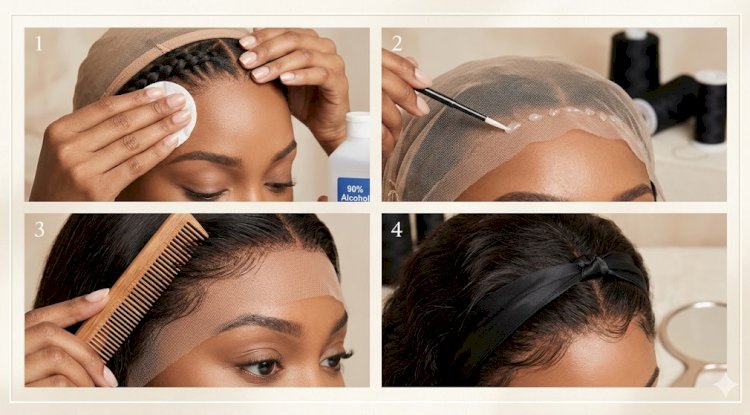
The longevity of your hold is 90% dependent on how clean your skin was before the first drop of glue touched your forehead. If your stylist did not thoroughly wipe down your hairline with 91% isopropyl alcohol to remove makeup, dirt, and oils, the glue is sticking to residue rather than your actual skin.
Step-by-Step: How to Safely Touch Up Your Frontal at Home
You don't need to run to the salon every time a corner lifts. Learning how to perform a clean, safe touch-up at home will save your wallet and keep your hairline intact.
What You'll Need:
- A skin-safe lace adhesive or a strong-hold lace melting spray
- 91% Isopropyl alcohol and cotton swabs
- A small cosmetic brush or wooden spatula
- A silk or satin melting band
- A blow dryer (with a cool air setting)
The Touch-Up Process:
- Clean the Area First: Never, under any circumstances, apply fresh glue over old, dirty, lifted glue. It creates a thick, gray buildup that looks messy and ruins the melt. Dip a cotton swab in alcohol and gently clean the old adhesive off your skin and the underside of the lifted lace. Let it dry completely.
- Apply a Thin Layer: Use your cosmetic brush to apply a very thin, even layer of adhesive to your skin—not the hair. If you are using traditional lace glue, wait for it to dry completely clear. It should feel tacky, not wet.
- Press and Place: Carefully press the lifted lace down onto the clear adhesive. Use the teeth of a fine-tooth comb to press the lace firmly into the skin.
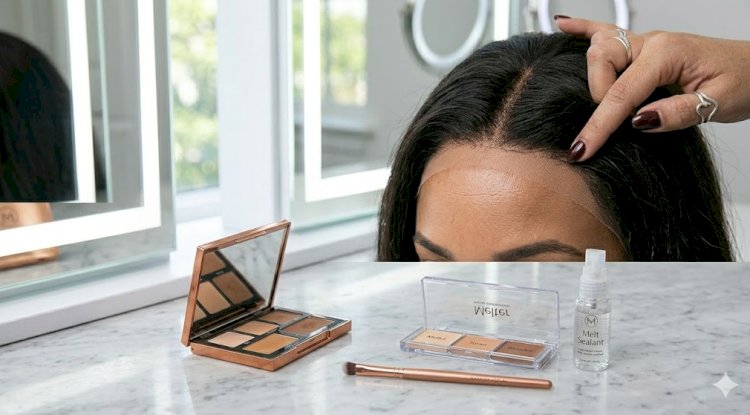
- Tie It Down: Spray a tiny bit of melting spray over the area, tie your elastic satin band tightly around your hairline, and sit under a dryer or use a blow dryer on a cool setting for 10 to 15 minutes.
Pros, Cons, and Burning Questions: Navigating the Frontal Lifestyle
Choosing how to wear and maintain your frontals comes with a learning curve. Let’s weigh the reality of this style and answer the most common questions head-on.
The Real Trade-Offs
- The Pros: Unmatched realism, complete freedom to part your hair anywhere along the hairline, and the ability to pull your hair back into gorgeous updos.
- The Cons: High maintenance, potential for hairline damage if removed incorrectly, and a continuous need for styling adjustments every few weeks.
FAQ: Frequently Asked Questions
Q: Can I just leave my frontal sew in on for two months if the braids feel tight?
Absolutely not. While the tracks sewn into your hair at the back might feel secure for 8 weeks, leaving a glued perimeter attached to your skin for that long is a recipe for disaster. Sweat, bacteria, and dead skin cells get trapped under the adhesive, which can lead to scalp irritation, foul odors, and severe hair thinning along your delicate edges. Remove or completely reinstall the unit every 3 weeks maximum.
Q: Is there an alternative if I hate using glue altogether?
Yes! If your skin is too sensitive for liquid adhesives, look into a 360 lace frontal wig. Because a 360 unit goes completely around the perimeter of your head, it distributes tension evenly. You can wear it completely glueless by using a silicone grip band, adjustable inner straps, or simple combs, giving you the high ponytail look without the daily stress of chemical glues.
Q: How do I stop my glue from turning white when I sweat?
When sweat mixes with liquid glue, it temporarily turns white. The golden rule here is: Do not touch it. If you leave it alone, dry off in a cool room, and let the air get to it, the adhesive will naturally dry down clear again. If you comb it or press on it while it is white, you will permanently ruin the bond and cause it to lift.

Conclusion: Protect Your Edges Above All Else
At the end of the day, a frontal is a beautiful luxury, but it requires respect. Expect to do a minor touch-up every week and a complete removal and reinstall every 2 to 3 weeks. No matter how amazing your hair looks, never prioritize a temporary style over the long-term health of your natural hairline. Always use proper citrus-based or alcohol-based adhesive removers to take off your lace—never yank it off out of impatience!
✨ Exclusive Styling Update: Ready to upgrade your hair collection with premium, long-lasting textures? Our highly anticipated Semi-Annual Sale has been officially extended until May 31st! Don't miss out on your chance to get 25% off on all collections. Whether you are stocking up on flawless raw bundles, HD closures, or versatile units, now is the perfect time to invest in premium quality for less. Shop the extended sale before it ends on May 31st!
What's Your Reaction?