Raising a Child with a Rare Disease: The Mental Load Nobody Prepares You For
I was in the middle of a work meeting when I remembered I hadn't called the insurance company back about the prior authorization. Which meant the prescription probably hadn't gone through. Which meant I needed to check whether the specialty pharmacy had flagged it. Which meant I needed to leave this meeting to make a call I'd already made twice this week.
That's not a dramatic story. That's a Tuesday.
When your child has a rare disease, the medical management never stops. There's no season where you get a break from it, no week where the calendar clears and everyone breathes normally. It's clinic appointments and blood draws and medication timing and formula prep and the school nurse who needs re-educating every September and the insurance denial letter that arrived on a Friday afternoon and the research study your metabolic team mentioned that you meant to look up and haven't had time for yet.
Every one of those tasks is manageable, separately. The problem is they're never separate. They layer, constantly, on top of everything else a parent is already doing. And nobody in the hospital waiting room hands you a pamphlet for that part.

The Weight That Doesn't Show
The hardest thing to explain to someone who hasn't lived it is that the work isn't just the appointments. It's everything that lives between the appointments.
It's lying awake running numbers — is her tyrosine level trending up or is that within normal variation? It's the part of your brain that's always calculating, even when you're at dinner with friends or sitting through your other kid's soccer game. It's the fact that you never fully clock out, because there's no version of this where you hand the responsibility to someone else for a weekend and genuinely stop thinking about it.
People call this the mental load. For rare disease parents, it's something more specific than that.
It's the knowledge that you know more about your child's condition than most of the doctors you'll ever see. Not because you're exceptional — because you've had to. When your child has something that affects roughly 1 in 100,000 people, you become the expert by necessity. You carry the full medical history in your head. You know the lab ranges. You catch the things that slip through. And that expertise costs you something, every day, whether you're conscious of it or not.
I'm not saying this to make it sound heroic. It isn't, particularly. It's just the reality of what this kind of parenting requires, and pretending otherwise doesn't help anyone.
What Happens to the Rest of Your Life
The other parts of your life don't disappear. They just change shape in ways you didn't negotiate for.
Careers get restructured around clinic schedules and sick days that don't fit the sick-day policy. Relationships absorb pressure they weren't designed for — partners who grieve differently, who have different thresholds for medical anxiety, who take on different parts of the management and sometimes resent it and sometimes don't say so. Siblings grow up in households where a lot of the emotional oxygen goes to the child who is sick, and they handle it with varying degrees of grace depending on their age and temperament and what's being asked of them that particular year.
Social life quietly contracts. Not all at once. Gradually. Dinner invitations you decline because the preparation required to eat somewhere new is more than you have energy for this week. Friendships that thin out because the people who don't share this experience eventually run out of things to say about it, and you run out of energy to explain.
None of this is anyone's fault.
It's just what happens when a significant amount of your family's bandwidth is perpetually spoken for. You work with what's left over, and some years there's more left over than others.
The Grief Nobody Names
There is a particular kind of grief that nobody in the rare disease community talks about enough, and I think it's because it feels disloyal to name it.
It's not grief for your child. Your child is here. Your child, in many cases, is doing remarkably well given everything. You love your child completely and you would not trade them.
But you grieve the version of parenting you thought you were going to have.
The uncomplicated birthday parties. The packed lunches that didn't require a spreadsheet. The pediatrician appointments that were about vaccines and milestones, not lab values and specialist referrals. The version of yourself that didn't know what a prior authorization was, or how long an insurance appeal takes, or what it feels like to read a research paper about your child's condition and understand most of it.
That grief is real and it's valid. It doesn't mean you're ungrateful. It doesn't mean you'd choose differently if you could. It just means you lost something — a version of the life you expected — and that loss is worth acknowledging rather than pushing down until it surfaces sideways in the car on the way home from clinic.
I have seen that grief come out sideways. I have felt it come out sideways. It's better when you name it.
What Actually Helps
I want to be specific here, because vague encouragement is not what you came here for.
Other parents who live it help. Everything else is secondary.
Not because therapists don't help, or because your family and friends don't mean well — they do. But there is a specific relief that comes from talking to someone who doesn't need the background explained. Who already knows why the insurance denial is so demoralizing. Who has had the conversation with the school nurse about why the formula isn't optional. Who understands that 'how is she doing?' is a question with a very long answer that you don't always have the energy to give.
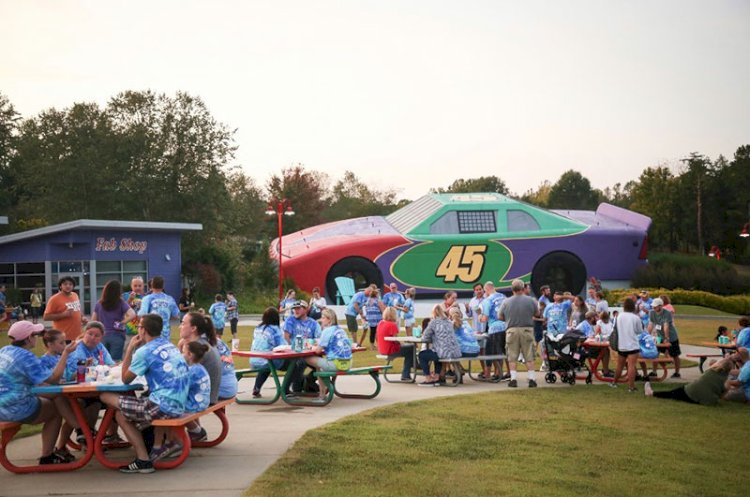
For families navigating rare metabolic diseases specifically, organizations like NOTACares exist for exactly this reason. What started as a Facebook group for families affected by Tyrosinemia has grown into a full community — resources, advocacy, events, and a network of parents who have been doing this for years and are willing to answer the questions that don't have official answers.
That kind of peer connection is something the medical system doesn't provide and can't provide. NORD's resources page is also worth bookmarking — they maintain directories for rare disease support communities across conditions, so whatever your family is navigating, there's likely a community that knows it from the inside.
Generic messaging — 'stay strong,' 'you've got this,' 'God only gives you what you can handle' — does very little for most people in this situation. The research on caregiver burnout consistently shows that what reduces it is practical support and social connection with people who share the experience. Not inspiration. Connection.
What I Want You to Know
You are not failing when it's hard.
I need to say that plainly because the culture around rare disease parenting has a way of making people feel like they should be handling it better. Like the parents who seem fine are really fine, and you're the only one who's struggling.
They're not really fine. They're doing what you're doing — managing, adapting, getting through the week. Some of them are better at showing the composed version in public. None of them are exempt from the weight.
Asking for help is not weakness. Telling your partner you've hit a wall is not weakness. Telling your child's metabolic team that you're burned out and need more support navigating the non-medical parts — that's not weakness either. Most good metabolic teams have social workers or can refer you to someone who specializes in rare disease family support. Use that.
The thing I've seen sustain people over years and decades of this — not over one difficult diagnosis period but over the long run — is not resilience in the grit-your-teeth sense. It's having people around them who understand. A partner who shares the load. A community of other parents who get it without explanation. A care team that treats them like a person, not just a caregiver for a patient.
That's it. That's the whole secret.
The weight doesn't go away. But carrying it with other people is genuinely different from carrying it alone. If you haven't found your people yet, keep looking. They exist, and they're looking for you too.
What's Your Reaction?