What Every Contractor Needs to Know Before Starting Their Next Big Project?
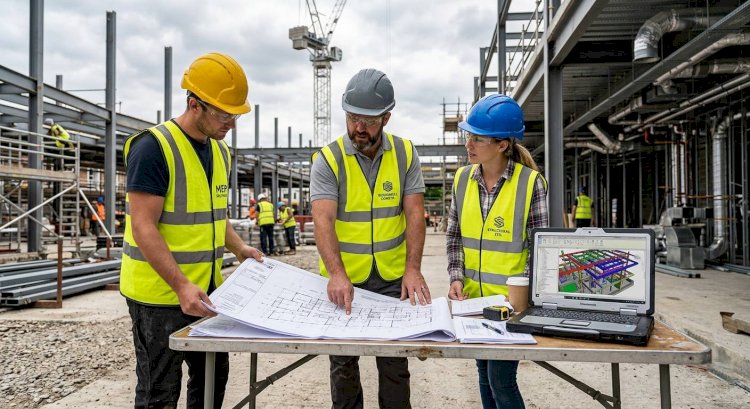
Most project failures in the U.S. construction industry do not happen on the jobsite. They happen weeks or months before the first crew mobilizes, in the pre-construction phase, where decisions are made quickly, coordination is loose, and assumptions fill the gaps that data should occupy.
If you are a general contractor, electrical contractor, mechanical contractor, or trade contractor preparing to take on a large commercial project, the choices you make before breaking ground will shape everything that follows. This article covers the critical pre-construction fundamentals that separate contractors who deliver on budget and on schedule from those who spend the back half of every project managing damage control.
The Pre-Construction Phase Is Where Profit Is Won or Lost
Most contractors think of pre-construction as a formality, a box to check before the real work begins. That mindset is expensive. Pre-construction is where project risk is either identified and managed or ignored and amplified. The Construction Industry Institute has documented repeatedly that early investment in pre-construction planning produces measurable reductions in cost growth and schedule slippage on large projects.
Specifically, the pre-construction phase is where you should be doing the following.
Conduct a Thorough Scope Review
Before signing a contract or submitting a final bid, every contractor needs to conduct a line-by-line scope review. This means confirming what is and is not included in your contract, identifying interfaces with other trades, and flagging any design gaps or ambiguities that will generate RFIs and change orders later.
General contractors should push for a formal scope gap meeting with the owner and design team before contract execution. Trade contractors should review the issued-for-construction drawings against the specification sections that govern their work and document every discrepancy in writing before mobilization.
Scope clarity at the front end is the single most effective change order prevention tool available.
Establish the Coordination Framework Early
On any project with multiple active trades, coordination is not optional and it is not passive. Someone has to own it, structure it, and enforce it. If that person is not clearly identified before the project starts, every trade will operate in isolation until conflicts surface in the field, at which point fixing them costs multiples of what early coordination would have required.
This is where BIM for General Contractors becomes a foundational pre-construction tool rather than a value-add. A federated BIM model, built before construction begins, gives every stakeholder a shared spatial reference. Conflicts between mechanical ductwork, structural steel, electrical conduit, and plumbing piping are identified and resolved in the model, not in the ceiling.
Why BIM Is No Longer Optional on Commercial Projects
Building Information Modeling has moved from a competitive differentiator to a baseline expectation on most mid-to-large commercial, healthcare, education, and infrastructure projects in the United States. Owners and developers increasingly require BIM deliverables as a contract condition, and general contractors who cannot facilitate a coordinated BIM environment are losing bids to firms that can.
But the case for BIM is not just about meeting owner requirements. It is about protecting your margins.
What Coordinated Models Actually Prevent
The average commercial construction project sees a significant portion of total labor hours consumed by rework. Industry research from Autodesk consistently points to poor coordination and incomplete documentation as the leading drivers of that rework. A coordinated BIM model directly addresses both.
When trade models are federated and clash detection is run before fabrication begins, the following become standard outcomes rather than aspirational goals.
- Ductwork, piping, conduit, and structural elements are spatially resolved before installation
- Shop drawings and spool drawings are generated from accurate model geometry
- Prefabricated assemblies arrive on site ready to install, not requiring field modification
- RFI volume drops because design questions are answered during coordination, not discovered during installation
For trade contractors specifically, this shift from reactive to proactive coordination is where the financial case for BIM becomes undeniable.
Trade-Specific Pre-Construction Priorities
Every trade enters a project with its own set of pre-construction priorities. Understanding those priorities and building them into your pre-construction workflow is what separates a smooth project from a chaotic one.
Mechanical Contractors
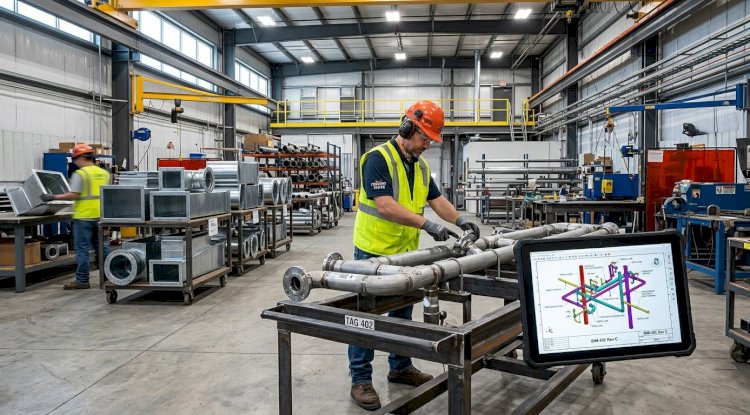
BIM for Mechanical Contractors addresses the most spatially demanding systems on any commercial project. HVAC ductwork, air handling units, VAV boxes, fan coil units, and associated piping systems compete for ceiling and shaft space with every other building system.
Before mobilization, mechanical contractors should be doing the following.
Coordination modeling — Build or verify the mechanical model to the required Level of Development and submit it into the federated coordination environment. Do not wait for the GC to request it. Submit early and request clash reports against current structural and MEP models.
Prefabrication planning — Identify ductwork and piping assemblies that can be prefabricated off-site. Prefabrication reduces field labor hours, improves quality control, and shortens installation time. This planning cannot happen effectively without an accurate coordinated model as the foundation.
Equipment submittals — Major mechanical equipment submittals need to be initiated in the pre-construction phase, not after construction begins. Lead times on air handling units, chillers, and custom equipment can run 16 to 30 weeks. A submittal submitted after mobilization will put your schedule at risk.
Electrical Contractors
BIM for Electrical Contractors delivers the greatest value in ceiling coordination and prefabrication workflows. Electrical systems, including power distribution, lighting, fire alarm, low-voltage, and specialty systems, run through virtually every area of a building and must coexist with structural and mechanical elements in often very tight spaces.
Pre-construction priorities for electrical contractors include the following.
Conduit routing coordination — Before bending a single piece of conduit, electrical contractors should have a coordinated routing plan based on the federated BIM model. This prevents the most common and costly field problem in electrical work, which is arriving at a ceiling space to find it already occupied by ductwork or structural members.
Load calculations and panel schedules — Confirm that the engineer's panel schedules align with the actual loads being served. Discrepancies discovered after rough-in begin are expensive. Catching them before the project starts is a one-hour task.
Gear and switchgear lead times — Like mechanical equipment, electrical switchgear, transformers, and specialty panels carry long lead times. Submittals for this equipment should be prepared and submitted in the first two to three weeks of pre-construction, not deferred until the project is already underway.
Plumbing and Other Trade Contractors
BIM for Trade Contractors across plumbing, fire protection, and specialty systems follows the same coordination framework. Every trade operating in shared ceiling and shaft spaces needs a model that reflects their systems accurately, and every trade benefits from resolving conflicts before mobilization.
Plumbing contractors in particular should pay attention to floor penetration coordination. Sleeves and core drills are among the most common sources of conflict with structural systems, and they are significantly easier to plan around a model than to fix after concrete is poured.
Project Documentation Standards That Protect You
Beyond BIM coordination, every contractor entering a large project needs to have their documentation practices locked in before day one. Poor documentation is how contractors lose change order disputes, damage client relationships, and expose themselves to legal risk.
RFI Management
Establish your RFI numbering system, response time expectations, and escalation path before the project starts. Every RFI should include a specific reference to the drawing or specification that is unclear, a proposed resolution where possible, and a note on the schedule or cost impact if the issue is not resolved by a specific date.
RFIs that lack specificity get slow responses. Slow responses delay work. Delayed work costs money that is rarely recovered.
Daily Field Reports
Daily field reports are legal documents. They establish what work was performed, how many workers were on site, what weather conditions existed, and what delays or disruptions occurred on a given day. Contractors who treat daily reports as a paperwork burden rather than a risk management tool are leaving their best evidence on the table when disputes arise.
Submittal Log
Maintain a live submittal log from the first day of pre-construction. Track every submittal required by your contract, the date submitted, the date returned, the status, and the date of resubmission if required. A gap in your submittal log is a gap in your schedule defense.
Selecting the Right Project Partners
For general contractors, the subcontractor selection process is itself a pre-construction task that directly affects project outcomes. Selecting trade partners based on price alone, without evaluating their coordination capabilities, BIM experience, and prefabrication capacity, is a false economy.
Builders and project owners are increasingly applying this same logic when selecting general contractors. Firms that can demonstrate VDC capability, a structured coordination process, and a track record of delivering accurate as-built documentation are winning more work at better margins than price-competitive firms without those capabilities.
The market is pricing BIM capability into contract awards. That trend is accelerating, not reversing.
The Mindset Every Contractor Needs Going Into a Large Project
Large projects are complex systems, not just large versions of small projects. The number of interfaces, stakeholders, constraints, and moving parts scales nonlinearly with project size, which means the management overhead required to keep everything coordinated also scales faster than most contractors expect. The contractors who consistently deliver large projects successfully share a common orientation. They treat pre-construction as the most important phase of the project, they invest in coordination tools and processes before problems appear, they document everything from day one, and they manage interfaces proactively rather than waiting for conflicts to surface in the field. BIM is the technical backbone of that orientation. But the mindset has to come first.
If you are preparing to start a significant commercial project and you have not yet established your coordination process, confirmed your submittal schedule, reviewed your scope for gaps, or built your documentation framework, those are the most important things you can do before mobilization day. Everything that follows will be shaped by the foundation you build now.
What's Your Reaction?