What Makes AI Agents Different from ChatGPT and Traditional Chatbots?
Artificial Intelligence (AI) has evolved rapidly over the past few years. While many people use terms like AI agents, ChatGPT, and chatbots interchangeably, they are not the same. Traditional chatbots were designed to answer simple questions based on predefined rules. ChatGPT introduced a major improvement by generating human-like conversations using large language models (LLMs). AI agents represent the next stage of AI evolution because they can not only understand and respond but also plan, make decisions, use tools, and complete tasks with minimal human involvement.
Understanding these differences is important for businesses, developers, and everyday users who want to choose the right AI solution. Although all three technologies rely on artificial intelligence, their capabilities, flexibility, and real-world applications are significantly different.
What Is a Traditional Chatbot?
A traditional chatbot is the earliest form of conversational AI. These bots follow predefined rules, decision trees, or scripted responses. They work well for repetitive customer support tasks but struggle when users ask unexpected questions.
For example, if a customer asks about store opening hours, a traditional chatbot can provide the correct answer because the information already exists in its database. However, if the customer asks a complex question that wasn't programmed into the system, the chatbot usually fails or transfers the conversation to a human agent.
Traditional chatbots are commonly used on websites, banking portals, and customer support platforms because they are simple, affordable, and easy to maintain. However, they have very limited intelligence and cannot reason or adapt beyond their predefined instructions.
What Is ChatGPT?
ChatGPT is an AI-powered conversational assistant built on a Large Language Model (LLM). Unlike traditional chatbots, it does not rely on fixed scripts. Instead, it predicts the most appropriate response based on patterns learned from massive amounts of text data.
This allows ChatGPT to answer a wide variety of questions, explain difficult concepts, write articles, generate code, summarize documents, translate languages, and assist with creative tasks. It understands context much better than traditional chatbots and can maintain natural conversations across multiple messages.
Despite these strengths, ChatGPT is primarily designed to respond to prompts. It waits for user instructions before taking action. While it can suggest plans or generate workflows, it generally does not independently execute tasks unless integrated with additional tools or systems.
What Is an AI Agent?
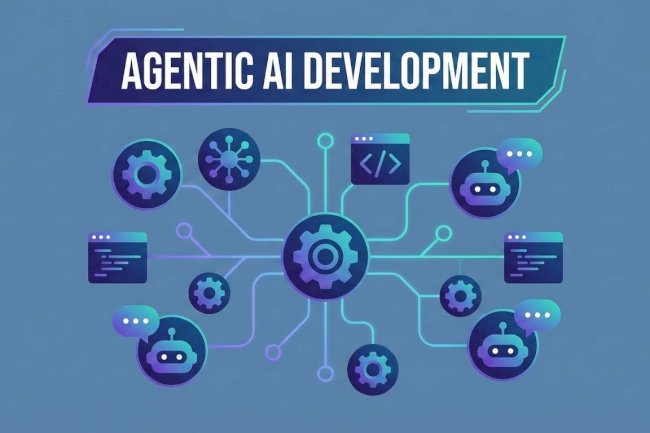
An AI agent goes beyond conversation. Instead of simply responding to questions, an AI agent can understand a goal, create a plan, execute multiple steps, monitor progress, and adjust its actions until the objective is completed.
For instance, imagine asking an AI agent to organize a business trip. Rather than only recommending destinations, the agent could research flights, compare hotel prices, check weather conditions, create a travel itinerary, send booking requests, update your calendar, and notify you about schedule changes—all with minimal supervision.
This ability to combine reasoning, planning, memory, and tool usage makes AI agents much more autonomous than chatbots or conversational AI assistants.
How AI Agents Work
AI agents work by combining multiple AI technologies into a single intelligent system. Unlike traditional chatbots or standalone AI models, they can understand goals, plan actions, use external tools, and complete tasks with minimal human intervention.
Here's how an AI agent typically works:
- Understands the User's Goal
The AI agent first analyzes the user's request to identify the main objective and the expected outcome. - Breaks the Task into Smaller Steps
Instead of handling the request all at once, it divides complex tasks into manageable subtasks. - Creates an Action Plan
The agent determines the most efficient sequence of actions needed to achieve the goal. - Uses External Tools and APIs
It can connect with software applications, databases, search engines, calendars, CRMs, or other APIs to gather information or perform actions. - Executes Each Task
The AI agent carries out every step in the planned workflow while monitoring progress. - Evaluates the Results
After completing each action, it checks whether the output meets the desired objective. - Adjusts Its Approach if Needed
If a task fails or produces inaccurate results, the agent can revise its strategy and try an alternative solution. - Delivers the Final Outcome
Once all tasks are completed successfully, the AI agent provides the finished result to the user.
How AI Agents Work
AI agents combine several advanced technologies into one intelligent system. Instead of relying on a single language model, they often integrate reasoning engines, memory systems, external APIs, software tools, databases, and automation platforms.
A typical AI agent performs several steps before completing a task:
- Understands the user's objective.
- Breaks the goal into smaller tasks.
- Chooses the best strategy.
- Uses available tools or APIs.
- Evaluates results.
- Makes adjustments if necessary.
- Delivers the completed outcome.
Because of this workflow, AI agents behave more like digital employees than simple conversational assistants.
Real-World Examples
Businesses across multiple industries are beginning to use AI agents for complex operations.
In customer service, AI agents can manage complete support cases rather than answering only FAQs. In healthcare, they assist with appointment scheduling, patient record management, and medical documentation. Financial institutions use AI agents to monitor transactions, detect fraud, and generate compliance reports. Marketing teams rely on AI agents to conduct market research, create content calendars, analyze campaign performance, and automate repetitive workflows.
Meanwhile, ChatGPT remains an excellent choice for writing, brainstorming, coding assistance, education, and general knowledge conversations.
Traditional chatbots continue to serve businesses that need inexpensive automation for routine customer inquiries.
Advantages of AI Agents
AI agents offer several important benefits compared to previous generations of AI systems.
- Greater automation of repetitive work.
- Better decision-making using multiple data sources.
- Ability to perform long, multi-step workflows.
- Reduced human intervention.
- Higher productivity for businesses.
- Continuous monitoring and task execution.
These advantages make AI agents attractive for organizations looking to automate complex business processes instead of simple conversations.
Are AI Agents Replacing ChatGPT?
Not entirely. ChatGPT and AI agents serve different purposes and often work together. Many AI agents actually use large language models like ChatGPT as their reasoning engine. The difference is that the AI agent surrounds the language model with planning systems, memory, automation tools, and external software integrations.
In other words, ChatGPT provides intelligence for conversation and reasoning, while the AI agent provides the ability to act on that intelligence.
Which One Should You Choose?
The right choice depends on your needs. If your goal is to answer frequently asked questions on a website, a traditional chatbot may be sufficient. If you need an AI assistant for writing, research, coding, learning, or content generation, ChatGPT is an excellent option. However, if your objective is to automate complex business workflows, manage projects, complete multi-step tasks, or operate independently, AI agents provide far greater capabilities.
As AI technology continues to evolve, AI agents are expected to become the foundation of intelligent automation across industries. Rather than replacing ChatGPT or traditional chatbots, they build upon these technologies to create systems that can think, plan, and take meaningful action with minimal human guidance.
What's Your Reaction?